
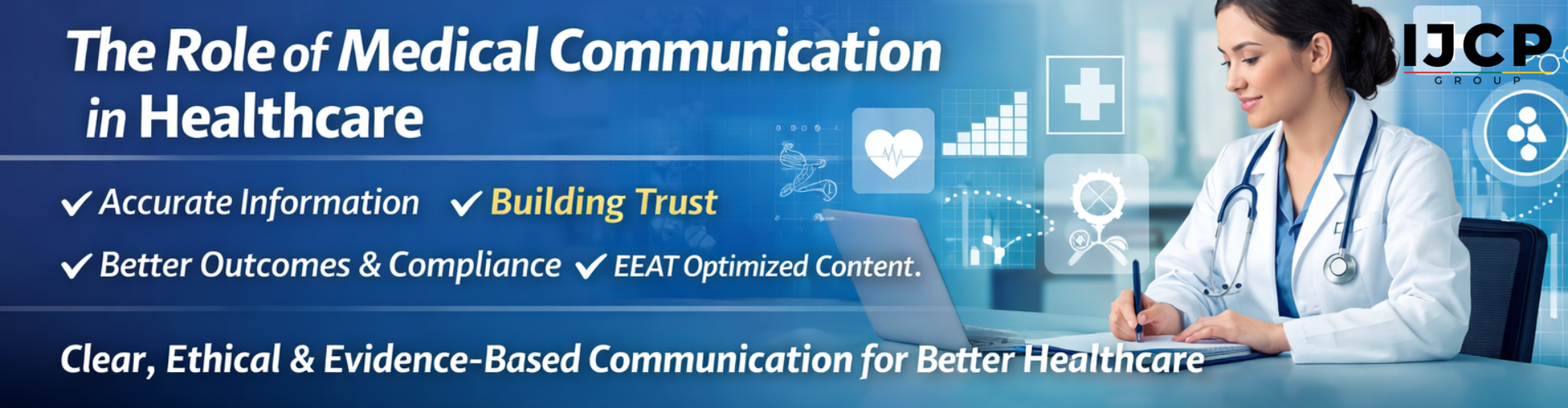
In today’s rapidly evolving healthcare ecosystem, accurate, transparent, and evidence-based communication is no longer optional-it is essential. With the growing complexity of medical science, digital transformation, and patient awareness, healthcare organizations must ensure that their communication is not only informative but also trustworthy and compliant.
Medical communication bridges the critical gap between clinical research, healthcare professionals, and patients, enabling better understanding, improved outcomes, and stronger engagement across the healthcare journey.
What is Medical Communication?
Medical communication refers to the structured and scientific dissemination of healthcare information to targeted audiences such as doctors, patients, researchers, and regulatory bodies.
This includes:
- Medical writing and publications
- Clinical research documentation
- Patient education content
- Healthcare marketing communication
- Continuing Medical Education (CME) materials
Organizations like IJCP Group specialize in transforming complex clinical data into clear, actionable insights for diverse stakeholders.
Why Medical Communication Matters in Healthcare
1. Enhances Clinical Decision-Making
Healthcare professionals rely heavily on accurate and up-to-date information. Well-structured medical communication ensures access to evidence-based insights, enabling better diagnosis and treatment planning.
2. Improves Patient Understanding
Patients today actively search for health information online. Clear, simplified, and reliable content helps them make informed healthcare decisions and improves adherence to treatment.
3. Ensures Regulatory Compliance
Healthcare content must follow strict global standards such as ICMJE and GPP guidelines. Professional medical communication ensures ethical and compliant dissemination of information.
4. Builds Trust and Credibility
Trust is the foundation of healthcare. Accurate, peer-reviewed, and transparent communication strengthens the credibility of healthcare brands and professionals.
Key Components of High-Quality Medical Communication
Evidence-Based Content
All communication must be backed by clinical research, peer-reviewed studies, and scientific validation.
Audience-Centric Approach
Content should be tailored based on the audience:
- Technical for healthcare professionals
- Simplified for patients
- Strategic for healthcare brands
Clarity and Accuracy
Complex medical data must be translated into clear, concise, and understandable language without losing scientific integrity.
Ethical Standards
Maintaining transparency, avoiding misleading claims, and adhering to regulatory frameworks is essential in healthcare communication.
The Growing Role of Medical Writing Services
Medical writing plays a central role in healthcare communication. It includes:
- Clinical trial manuscripts
- Research papers and journal publications
- Regulatory documents
- Healthcare blogs and digital content
Professional medical writing services ensure that content is:
- Scientifically accurate
- SEO-optimized for visibility
- Compliant with global standards
- Engaging for the target audience
As highlighted by IJCP Group, high-quality medical writing is the backbone of effective healthcare communication, ensuring clarity, compliance, and credibility across all platforms.
Digital Transformation in Healthcare Communication
The rise of digital platforms has significantly changed how healthcare information is consumed.
Key Trends:
- Telemedicine and digital consultations
- Healthcare blogs and SEO-driven content
- Social media engagement
- AI-powered healthcare communication
Patients now rely on online platforms for health-related decisions, making digital healthcare communication more important than ever.
Challenges in Healthcare Communication
Despite its importance, medical communication faces several challenges:
- Misinformation and unverified sources
- Complex medical terminology
- Regulatory restrictions
- Maintaining accuracy while simplifying content
Addressing these challenges requires expertise, structured processes, and domain knowledge, which professional agencies bring to the table.
How Expert Medical Communication Drives Better Outcomes
A strategic approach to medical communication helps:
- Improve patient education and awareness
- Enhance doctor-patient relationships
- Support pharmaceutical and healthcare marketing
- Promote evidence-based medical practices
Organizations with decades of experience in healthcare communication have demonstrated that structured and credible content directly contributes to better healthcare outcomes.
EEAT in Healthcare Content: Why It Matters
Google places strong emphasis on EEAT (Experience, Expertise, Authoritativeness, Trustworthiness), especially for healthcare content (YMYL – Your Money or Your Life).
To meet EEAT standards:
- Content must be created or reviewed by medical experts
- Information should be backed by credible sources
- Websites should maintain transparency and authority
- Regular updates ensure accuracy and relevance
Healthcare organizations that follow EEAT principles gain better visibility, trust, and long-term SEO performance.
Medical communication is not just about sharing information-it is about building trust, improving healthcare outcomes, and enabling informed decision-making.
As the healthcare landscape continues to evolve, the demand for accurate, ethical, and impactful communication will only grow. Organizations that invest in professional medical communication and follow EEAT principles will lead the way in delivering meaningful healthcare experiences.