Clinical research produces essential data on diseases, diagnostics, and patient care. However, even the most rigorous studies fall short if their findings aren't communicated effectively. Professional medical writing bridges this gap, transforming complex clinical data into clear, structured insights that healthcare professionals, clinicians, and researchers can easily digest and evaluate.
In today's fast-paced research landscape, excellent scientific communication goes beyond good grammar. It demands context, accuracy, credibility, and an unwavering commitment to the evidence.
Understanding Medical Writing by IJCP Group. At its core, medical writing is the craft of producing scientifically accurate content derived from clinical data. It supports every phase of the research-to-publication journey. Depending on a project's needs, medical writers produce:
Peer-reviewed manuscripts
Conference presentations and scientific abstracts
Literature and systematic reviews
Educational materials for healthcare providers
Clinical summaries and publication documents
By collaborating closely with subject-matter experts, professional writers ensure that the core scientific message remains intact, clear, and highly accurate.
Why Medical Writing is Essential: Clinical studies are dense with specialized jargon, intricate methodologies, and complex statistics. A poorly written document obscures the value of the research.
Effective medical writing builds a seamless narrative: Research Question → Methodology → Results → Interpretation → Conclusion.
This logical flow empowers readers to assess the evidence accurately. The objective is never to embellish the findings, but to report exactly what the data proves with total transparency.
Navigating Medical Publications by IJCP Group: When a study is ready to be shared, medical publication becomes the next major hurdle. Getting published requires strict adherence to journal scopes, formatting rules, disclosure guidelines, and submission protocols.
A skilled writing team helps researchers polish and tailor their manuscripts to meet these exact standards, ensuring the paper is "publication-ready." However, it is important to note that a writer cannot guarantee a paper's acceptance; peer reviewers and journal editors make that decision based on the study's scientific merit and originality.
Clarity Trumps Complexity. There is a misconception that scientific writing must be dense to sound authoritative. In reality, the best medical writing simplifies complex concepts without watering down the science. A high-quality document will:
Rely on precise terminology
Keep findings objective and distinct from interpretations
Avoid making claims not backed by data
Openly discuss the study's limitations
Maintain absolute consistency from start to finish
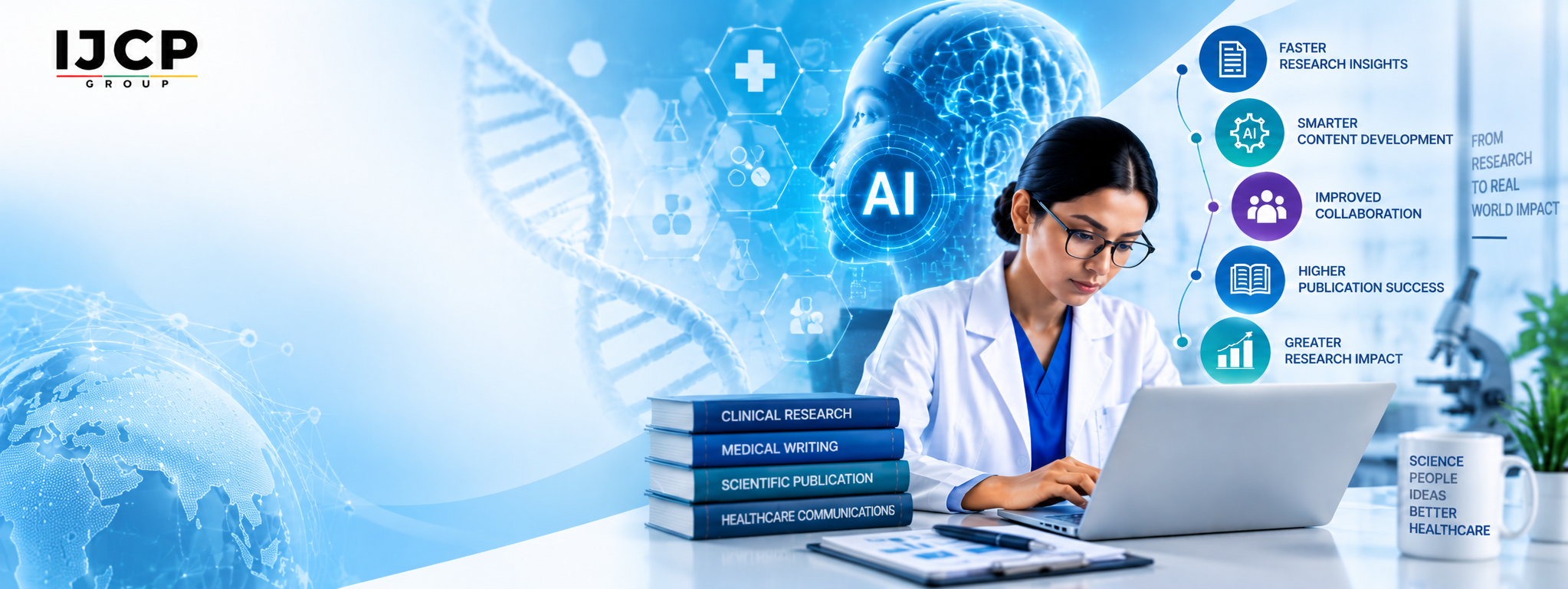
The AI Question: Can Algorithms Replace Writers? Artificial intelligence is rapidly entering the research space, proving useful for drafting outlines, fixing grammar, and summarizing text. Yet, scientific writing demands a level of critical judgment that AI does not possess.
AI might generate a confident-sounding sentence that misinterprets a clinical finding or lacks crucial context. Therefore, AI should be treated as an assistant, not an author. The most secure workflow blends AI efficiency with expert human review and editorial oversight, ensuring the final piece remains scientifically sound.
Hallmarks of Premium Medical Writing: Top-tier medical writing goes beyond just putting words on a page. It requires:
Scientific Accuracy: Every claim must reflect the actual evidence.
Clarity: Complex data must be easy to follow.
Transparency: Limitations and disclosures must be openly shared.
Audience Alignment: The tone and depth must match the target reader.
Ethical Standards: Findings must be reported responsibly, without misleading angles.
Partnering with IJCP Group: When it comes to elevating scientific communication, IJCP Group offers deep expertise across medical education, scientific publishing, and healthcare communication.
By integrating modern, tech-enabled workflows with seasoned professional oversight, IJCP Group helps life-sciences organizations and researchers communicate complex evidence. The ultimate goal is always to protect the integrity of the clinical data while maximizing its reach and clarity.
Looking Ahead: As the volume of clinical research grows and digital tools advance, clear scientific communication will only become more critical. While AI will continue to streamline the drafting process, human expertise will remain the gold standard for quality control, ethical oversight, and scientific interpretation. The future of medical writing isn't just about speed—it is about achieving a higher standard of scientific truth, empowered by technology and guided by experts.