Every year, the healthcare sector generates an immense volume of data across clinical trials, laboratory studies, and pharmaceutical development. For these findings to effectively advance medical knowledge, raw data must be translated into structured, accessible, and highly accurate documentation.
Professional scientific communication bridges the gap between complex research and the wider healthcare community. It ensures that critical evidence reaches researchers, practitioners, academic institutions, and regulatory bodies with absolute clarity and uncompromising integrity.
Defining Scientific Healthcare Communication
Scientific healthcare communication is a specialized discipline dedicated to structuring medical, clinical, and pharmaceutical data. It requires a rigorous blend of clinical comprehension, evidence evaluation, and advanced editorial execution.
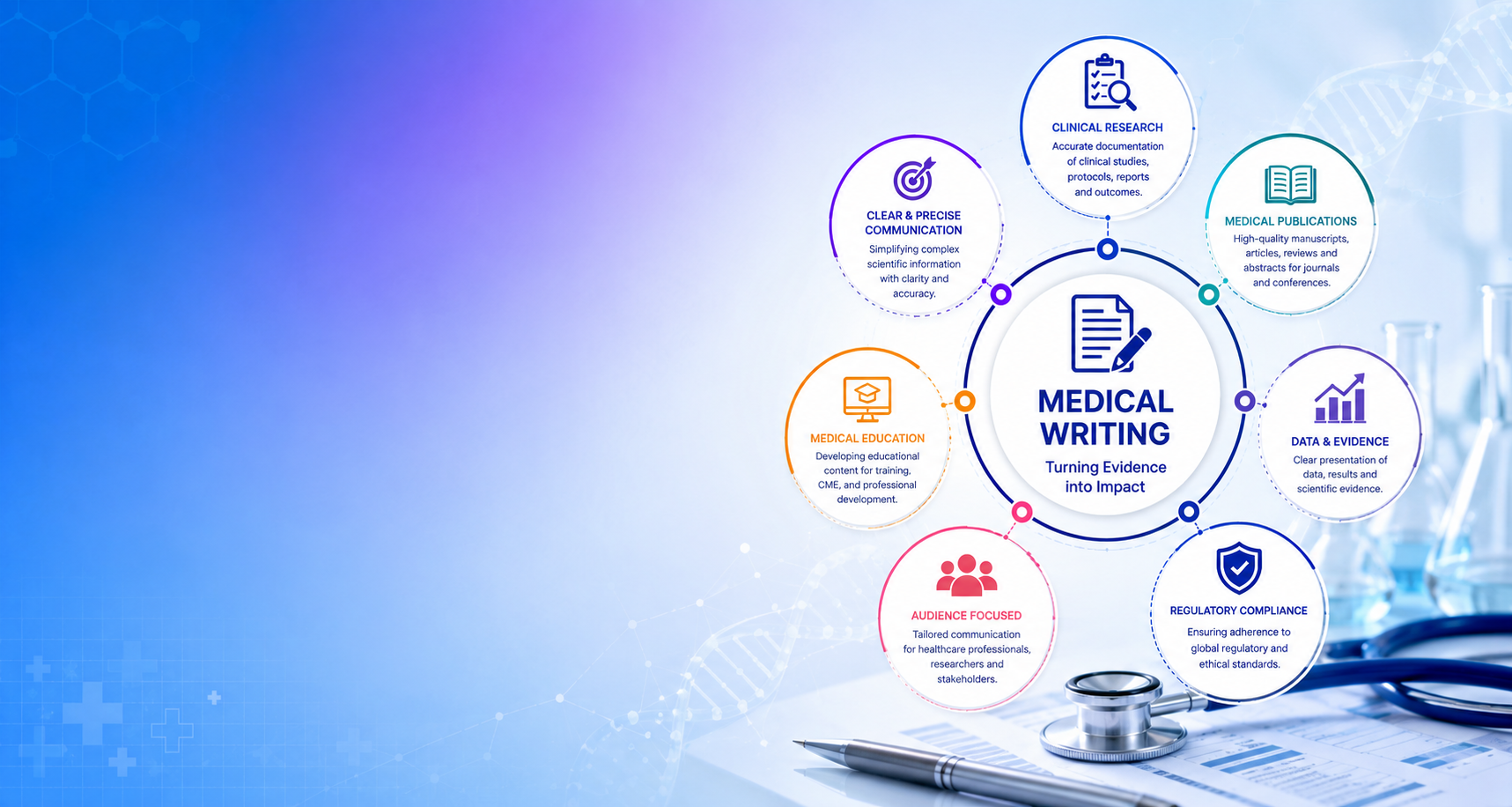
Unlike general health writing, this highly regulated field demands an intricate understanding of research methodologies, clinical terminologies, ethical reporting standards, and stringent publication guidelines. Professionals in this space develop a wide array of critical assets, including:
- Research manuscripts and review articles
- Clinical trial documentation and case reports
- Conference abstracts and scientific posters
- Continuing Medical Education (CME) materials
- Regulatory and publication-related resources
The primary objective is to present research findings transparently, ensuring the scientific meaning remains intact and verifiable.
The Role of Clinical Documentation in Research
Without a logical narrative structure, extensive technical data can easily overwhelm readers. Professional scientific documentation organizes complex datasets so that the research methodology, clinical endpoints, limitations, and conclusions are immediately comprehensible to a specialized audience.
High-quality documentation elevates research by ensuring consistency in clinical terminology, optimizing the logical flow of evidence, and enhancing the overall readability of technical reports. The goal is never to artificially inflate the significance of the findings, but to present the data with absolute transparency and precision.
Navigating the Medical Publication Process
For clinical findings to influence global healthcare practices, they must be effectively disseminated. Preparing research for formal medical publication involves a multifaceted workflow that extends far beyond the initial drafting phase.
Successfully navigating the publication ecosystem requires:
- Selecting the most appropriate target journals based on scope and audience.
- Adhering strictly to specific author guidelines and formatting requirements.
- Conducting rigorous verification of all cited references and supporting evidence.
- Managing ethical disclosures, conflict-of-interest statements, and patient confidentiality.
- Addressing and integrating peer-review feedback during the editorial process.
A professionally structured manuscript significantly improves the peer-review experience, allowing journal editors to focus on the scientific merit of the research rather than organizational flaws.
Scientific Content vs. General Healthcare Marketing
While both involve written media, scientific documentation and general content serve entirely different functions. Standard health content often prioritizes search engagement, brand awareness, and simplified readability for the general public.
Conversely, scientific and clinical communication is anchored in evidence-based accuracy, methodological context, and ethical compliance. A clinical study report demands a formal structural hierarchy and precise technical vocabulary that would be entirely out of place in a consumer-facing blog post.
Core Competencies for Scientific Communicators
Developing credible clinical documents requires a hybrid skill set. Professionals in this sector must possess a strong foundation in clinical science to interpret complex trial data accurately. They must exhibit critical thinking to separate evidence-based outcomes from speculative conclusions. Furthermore, meticulous attention to detail is required to maintain consistency across formatting, data presentation, and referencing, all while adhering to the highest ethical standards of academic publishing.
The Integration of AI in Healthcare Content Development
Artificial intelligence is rapidly modernizing the workflow of scientific communication. Generative tools now provide substantial administrative support by rapidly synthesizing literature, structuring preliminary document outlines, and refining syntax.
However, clinical data requires contextual interpretation that algorithms cannot provide. AI-generated text can inadvertently introduce factual inaccuracies, misinterpret statistical significance, or cite hallucinated references. Consequently, technology serves strictly as an operational accelerant. Human clinical experts remain fundamentally necessary to validate evidence, ensure ethical compliance, and verify the final clinical meaning of the text.
Selecting a Scientific Communication Partner
When institutions seek external support for clinical documentation and publication strategies, evaluation must extend beyond standard procurement metrics like cost and turnaround time.
A capable partner should demonstrate proven expertise in the specific therapeutic area and document type required. They must have robust, multi-tiered quality control processes, rigorous reference verification protocols, and strict data confidentiality frameworks. A credible agency will prioritize scientific integrity and ethical transparency above all else.
The IJCP Group Approach to Scientific Content
IJCP Group delivers integrated solutions across healthcare communication, scientific content development, and CME initiatives. By merging deep clinical expertise with advanced technological workflows and Answer Engine Optimization (AEO) strategies, IJCP Group structures complex clinical evidence into authoritative, high-impact professional resources.
This methodology ensures that pharmaceutical organizations, researchers, and healthcare institutions can communicate their clinical data efficiently, accurately, and in strict alignment with global publication standards.
Frequently Asked Questions
What is clinical scientific communication?
It is the highly specialized practice of structuring and formatting complex medical, pharmaceutical, and clinical data into accurate documents for professional, regulatory, or educational use.
How does clinical documentation differ from publication?
Documentation is the process of drafting and structuring the research data. Publication is the broader strategic process of submitting that documentation to peer-reviewed journals or academic conferences for global dissemination.
Can artificial intelligence automate clinical content creation?
AI effectively accelerates administrative tasks like outlining and literature summarization, but rigorous human oversight is mandatory to verify scientific accuracy, clinical context, and ethical compliance.
Why is evidence-based accuracy so critical?
Precision ensures that all research claims are directly supported by verified data, maintaining the integrity of the medical literature and preventing the spread of misleading clinical guidance.